A Trustworthy PCB and Electronic Manufacturing Enterprise! Contact Us


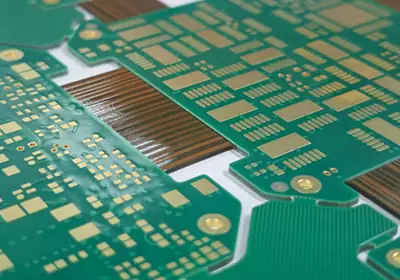
PCB (Printed Circuit Board) is an essential component of modern electronic products. It forms a multi-layered structure by stacking circuit boards, enabling more complex circuit functions.
PCB lamination refers to the process of fixing the various layers in a multi-layered board together through lamination, thus creating a robust overall structure.
Rogers Corporation's RF PCB laminates are high-performance circuit board materials specifically engineered for high-frequency applications.
These materials typically exhibit outstanding dielectric properties, low loss characteristics, and excellent thermal stability, making them suitable for high-speed electronic designs, commercial microwave, and RF applications.
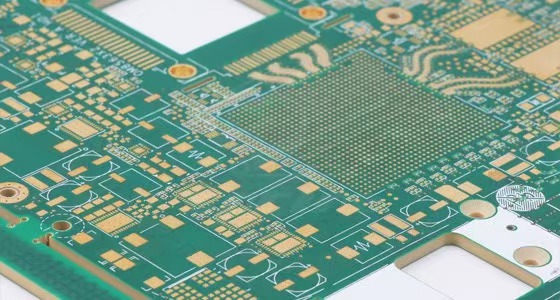
PCB board material, or copper-clad laminate, is the substrate used to manufacture PCBs. It determines the electrical, mechanical, thermal, and manufacturability of the PCB.
Key Performance Parameters
♞Tg Glass Transition Temperature: The critical temperature at which the substrate begins to soften from a solid state. A higher Tg indicates better heat resistance and
greater dimensional and performance stability at high temperatures.
· Standard FR-4 Tg: 130°C - 140°C
· Medium Tg FR-4: 150°C - 160°C
· High Tg FR-4: ≥ 170°C
♞Td Thermal Decomposition Temperature: The temperature at which the substrate begins to chemically decompose. A higher Td indicates better stability at high temperatures
and stronger resistance to thermal oxidative stress (CAF).
♞Dk Dielectric Constant: Affects the speed and impedance of signal propagation in the medium. A lower Dk value results in faster signal propagation. Crucial for high-speed digital
and high-frequency analog circuits.
♞Df Loss Factor/Dielectric Loss: The energy loss of a signal propagating in the medium. A lower Df value results in lower signal loss, equally important for high-speed
and high-frequency circuits.
♞CTE (Coefficient of Thermal Expansion): The degree to which a material expands when heated. The CTE along the Z-axis (thickness direction) needs to be as small as possible to
prevent copper breakage in the vias after repeated reflow soldering.
♞CAF Resistance: Resistance to ion migration, preventing anodic glass fiber leakage failure along the glass fiber bundle in high-temperature and high-humidity environments.
The RO4000® series of Rogers RO4000 hydrocarbon ceramic laminates and prepregs have consistently been industry leaders. This low-loss material is widely used in microwave and
millimeter-wave frequency designs, offering easier circuit fabrication and consistent performance compared to traditional PTFE materials.
Advantages
Compatible with FR-4 manufacturing processes, stable dielectric constant (Dk), high thermal conductivity (.6-.8 W/m.K), compatible with lead-free soldering processes, low Z-axis CTE,
ensuring highly reliable plated vias, optimized cost-effectiveness, Dk range (2.55-6.15), and UL 94 V-0 flame retardant rating.
RO4000® LoPro® laminates utilize Rogers proprietary technology to support the mating of reverse-processed copper foil with standard RO4000 series materials.
The resulting laminates reduce conductor losses, improve insertion losses and signal integrity, while retaining other desirable properties of standard RO4000 laminate systems.
RO4000 ceramic hydrocarbon laminates enable superior high-frequency performance and low-cost circuit manufacturing. They can be processed using standard epoxy/glass (FR-4) processes,
eliminating the need for specialized fabrication steps and reducing manufacturing costs.
Features: Low insertion loss; RO4003C™, RO4350B™, and RO4835™ Lopro® laminates available; multilayer board (MLB) functionality; CAF resistance.
Benefits: Reduced insertion loss, supporting higher frequency designs (above 40 GHz); reduced passive intermodulation (PIM) in base station antennas; reduced conductor loss;
improved circuit thermal performance.
RO4003C™ Laminate: Rogers RO4003C material is a proprietary glass cloth reinforced, ceramic-filled hydrocarbon composite that combines the electrical properties of PTFE/glass cloth
with the processability of epoxy/glass.
RO4003C laminates are available in two different configurations, using 1080 and 1674 glass cloths. All configurations have the same electrical performance specifications.
RO4003C laminates undergo rigorous process control, resulting in a stable and consistent dielectric constant (Dk) and low-loss characteristics.
Its unique mechanical properties allow for processing similarly to standard epoxy/glass laminates, but at a significantly lower cost than traditional microwave laminates.
Unlike PTFE microwave materials, this material requires no special through-hole treatment or handling procedures.
RO4003C material is unbrominated and does not meet UL 94 V-0 standards. For applications or designs requiring UL 94 V-0 flame retardancy ratings,
RO4835™ and RO4350B™ laminates can meet this requirement.
Characteristics: Dk 3.38 +/- 0.05, Df 0.0027@10GHz, Z-axis thermal expansion coefficient 46 ppm/°C;
Advantages: Ideal for multilayer board (MLB) structures, with a processing method similar to FR-4, lower cost, designed for performance-sensitive high-volume applications,
and offers excellent value.